
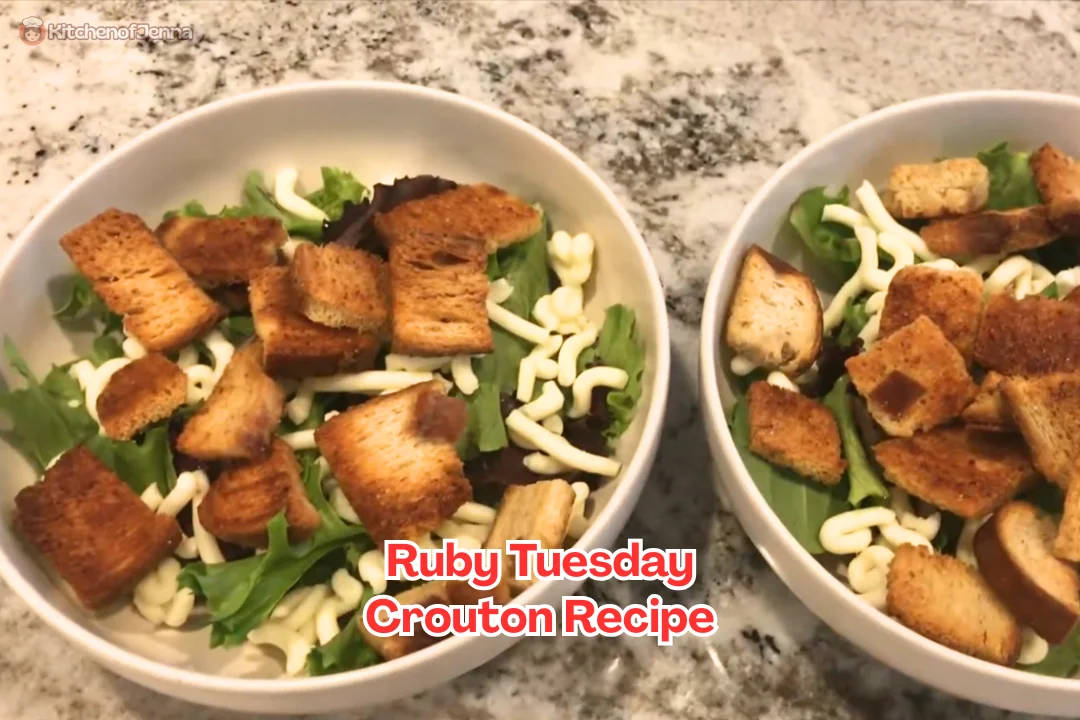
Ruby Tuesday Crouton Recipe (Buttery, Garlic, and Crispy)
Today’s Ruby Tuesday crouton recipe is a simple way to make those big, crunchy bread cubes that add so much texture to a fresh salad.
I like how a few basic ingredients can turn ordinary bread into something that tastes right at home on a restaurant-style salad.
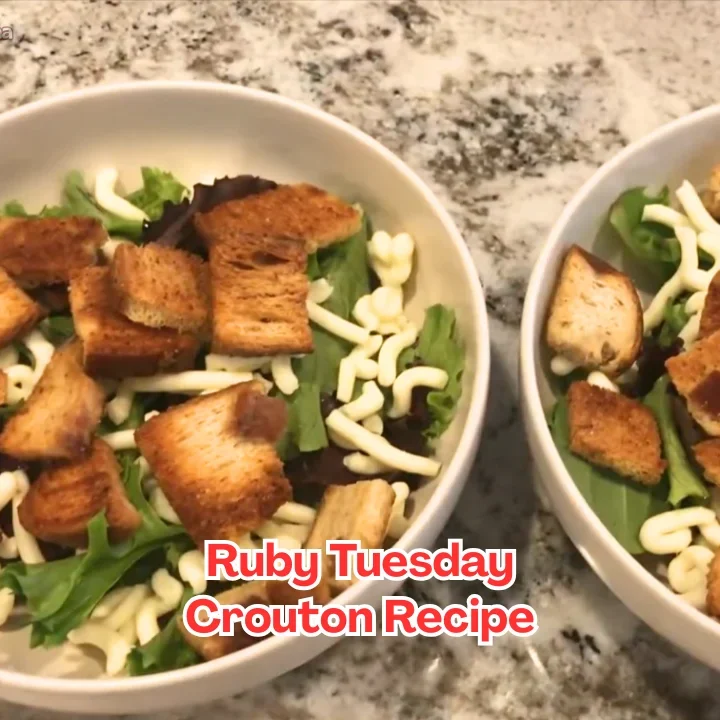
With pumpernickel bread, melted butter, garlic powder, and salt, you get a hearty crouton with a rich flavor and a crisp outside.
What makes these homemade croutons stand out is their size and texture.
Instead of small, dry cubes, you get larger pieces that are easy to pick up with a fork and have plenty of room for the butter and garlic seasoning to cling to each bite.
This copycat Ruby Tuesday crouton recipe takes about 15 minutes in the oven, depending on how fresh your bread is.
Serve them over a crisp garden salad, toss them into a Caesar salad, or scatter a handful over your favorite bowl of soup.
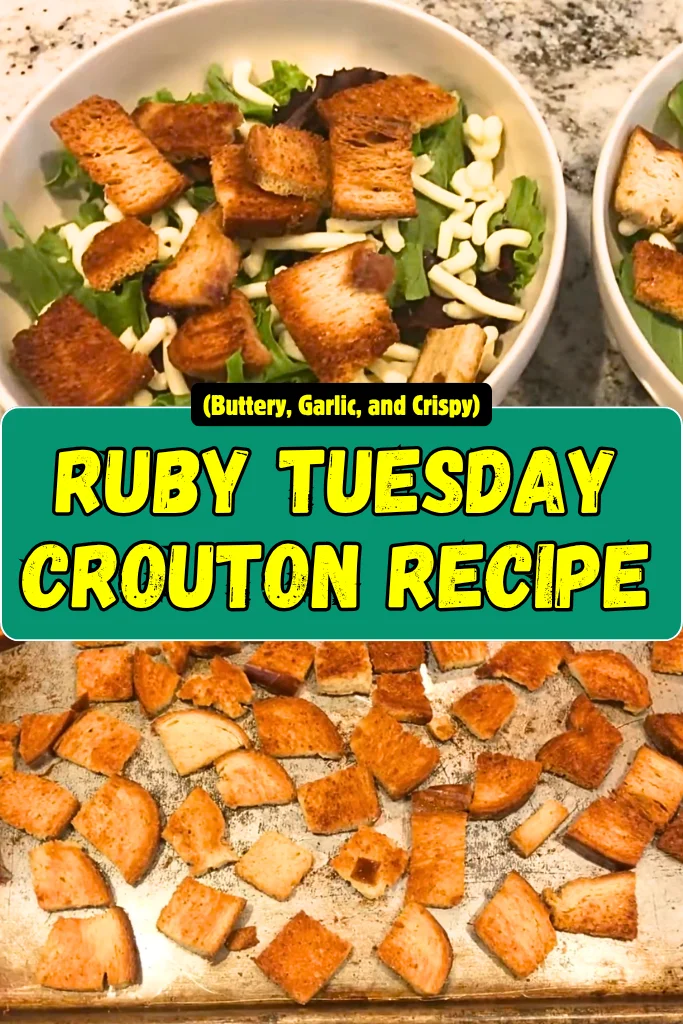
What Makes Ruby Tuesday Croutons Different
Ruby Tuesday-style croutons are known for their hearty, crunchy texture and savory flavor.
Pumpernickel bread is a good choice for recreating that darker restaurant-style look, while butter, garlic powder, and salt add a simple, rich seasoning.
The size of the bread cubes matters, too. I cut mine about ¾ to 1 inch wide so they have a firm outside without turning into tiny, hard pieces. Baking them at 375°F helps dry out the bread and brown the edges.
This is a straightforward homemade version inspired by the restaurant-style croutons, rather than a verified recipe from Ruby Tuesday’s kitchen.
You can adjust the seasoning and baking time to suit your bread and the texture you enjoy most.
What Types of Bread Should I Use
Pumpernickel bread is my first choice for a darker, more distinctive crouton, but rye bread works well when pumpernickel is hard to find. Both have a hearty flavor that pairs nicely with butter and garlic.
Here are a few bread options to consider:
- Pumpernickel bread: Choose this for a dark color and earthy flavor. It gives your croutons a more distinctive appearance.
- Rye bread: Use rye if you want a similar hearty taste with a slightly different flavor.
- Sourdough bread: This makes sturdy croutons with a mild tang and crisp edges.
- French bread: Choose it for a lighter, more neutral flavor and a firm, crunchy bite.
- Italian bread: This is another practical option if you have a loaf left over from dinner.
Day-old bread is especially useful because it contains less moisture than fresh bread.
If your bread is fresh, don’t worry. Just keep an eye on the croutons and allow a few extra minutes in the oven if needed.
Perfect For
These homemade Ruby Tuesday-style croutons are handy to keep around when you want to add a little crunch to an everyday meal.
Weeknight salads: Turn a simple bowl of lettuce, tomatoes, cucumbers, and dressing into a more filling side.
Caesar salads: Add a buttery crunch alongside crisp romaine and Parmesan cheese.
Creamy soups: Drop a few croutons over tomato soup or broccoli cheese soup just before serving.
Leftover bread: Use bread that’s a day or two old instead of letting it go to waste.
Restaurant-style dinners at home: Serve a fresh salad with grilled chicken, pasta, or steak.
Quick savory snacks: Eat a few straight from the bowl while they’re fresh and crisp.
Ruby Tuesday Crouton Ingredients
4 cups bread cubes: This is about four slices of bread, depending on their size and thickness. Pumpernickel is a good choice for a darker, hearty crouton, while rye makes a useful substitute. Cut the bread into pieces about ¾ to 1 inch wide.
4 tablespoons butter (½ stick): Melt the butter before adding it to the bread. It helps the cubes brown and gives them a rich, savory flavor. Salted butter works well with the recipe as written. If you use unsalted butter, taste a cooled crouton before adding more salt.
½ teaspoon garlic powder: Garlic powder spreads easily over the bread and gives each bite a mild garlic flavor. It works better here than fresh minced garlic, which can burn during baking.
½ teaspoon regular table salt: Sprinkle the salt over the bread cubes before adding the butter. This helps distribute the seasoning throughout the batch. If your bread is already salty, you can start with a little less.
Kitchen Equipment You’ll Need
Sharp bread knife: Use a serrated knife to cut through the loaf without squashing the slices. This also helps you make cubes that are similar in size.
Measuring cups and spoons: Measure the bread, butter, garlic powder, and salt so the seasoning stays balanced.
Large mixing bowl: A roomy bowl gives you space to toss the bread without spilling cubes over the sides.
Microwave-safe bowl: Use this to melt the butter in short intervals. A small saucepan on the stove also works.
Large spoon: Stir the bread cubes while adding the melted butter. You can use clean hands if that feels easier.
Baking sheet: Spread the cubes in a single layer so the hot oven air can reach their edges.
Oven: Bake at 375°F until the croutons are golden and crisp.
How to Make Ruby Tuesday Croutons
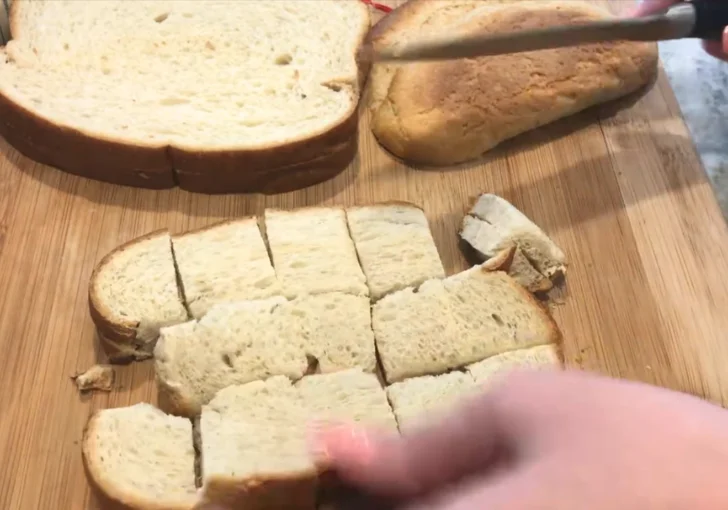
Step 01 – Cut the Bread into Cubes
Cut the bread into cubes about ¾ to 1 inch wide. Work with one slice at a time so the bread does not stick together. Measure the cubes as you go until you have 4 cups.
Keep the pieces fairly large to get the hearty crouton texture associated with Ruby Tuesday.
Step 02 – Season the Bread
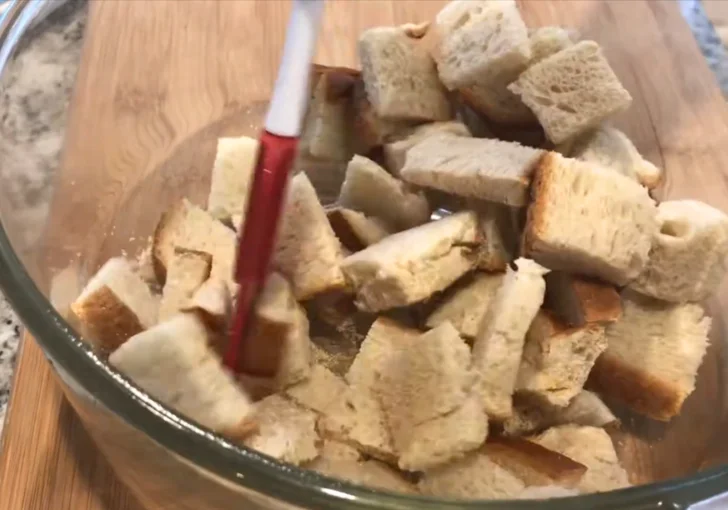
Place the bread cubes in a large mixing bowl. Sprinkle the garlic powder and salt over the bread. Toss gently with your hands or a large spoon until the seasonings are spread across the cubes.
Separate any pieces that are stuck together so the butter can reach all sides.
Step 03 – Melt the Butter
Place 4 tablespoons of butter in a microwave-safe bowl. Heat for about 20 seconds, then check whether it has melted.
If needed, heat it in short intervals until fully melted. Microwave times vary, so avoid overheating the butter.
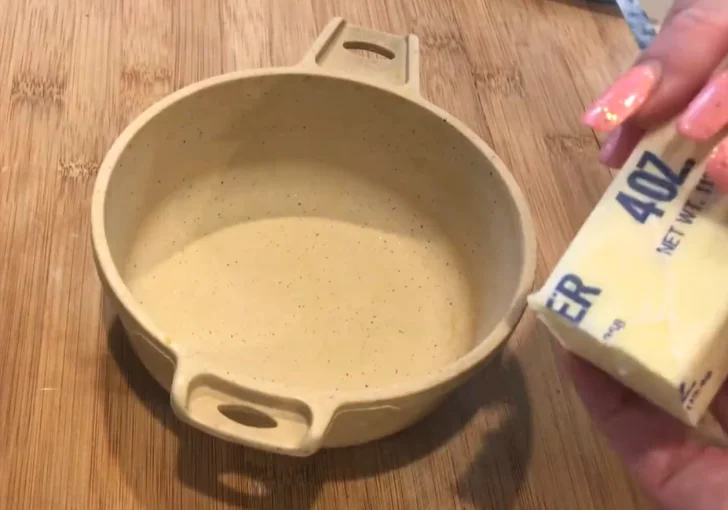
Step 04 – Coat the Bread with Butter
Slowly drizzle the melted butter over the bread cubes while tossing continuously. Do not pour all the butter into one spot, as the bread underneath may soak up too much.
Keep tossing and turning the cubes until the butter is distributed as evenly as possible.
Scrape up any seasoning or butter left at the bottom of the bowl and mix it through the bread.
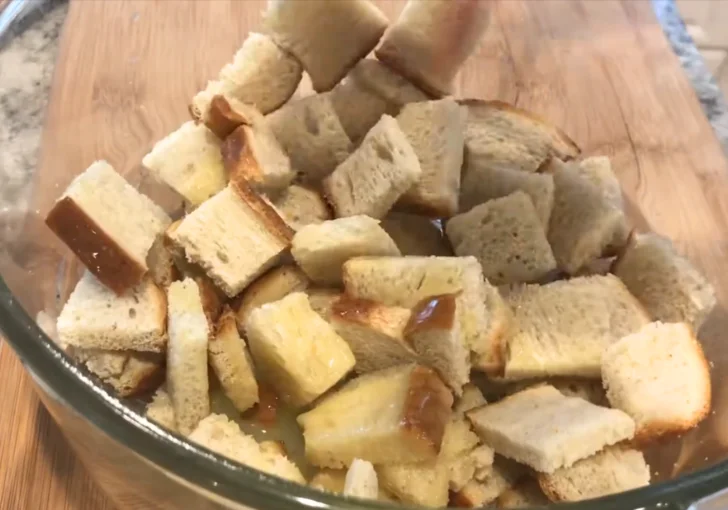
Step 05 – Arrange on a Baking Sheet
Preheat your oven to 375°F. Spread the coated bread cubes across a baking sheet in a single layer. Leave a little space between the pieces so the hot air can circulate.
If the cubes are crowded or piled on top of one another, they may brown unevenly and take longer to crisp.
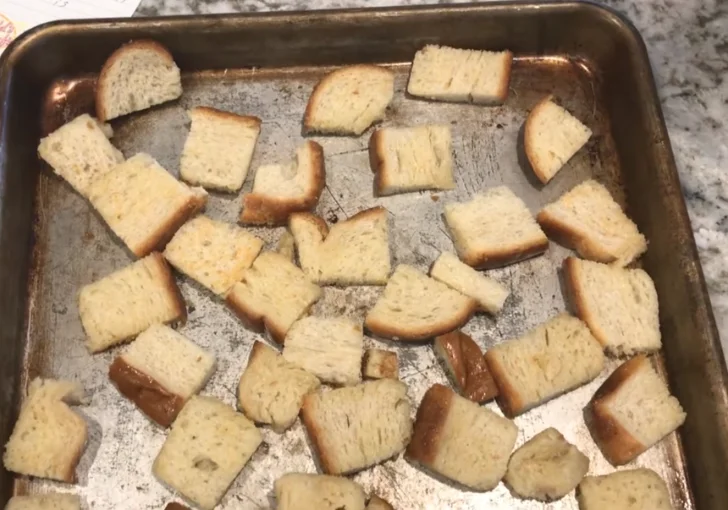
Step 06 – Bake Until Golden and Crisp
Bake for 10 minutes, then check the croutons. If they still feel soft or look pale, continue baking for another 3–5 minutes. The video used about 15 minutes because the bread was not very stale.
Turn the croutons halfway through baking so more sides brown evenly. Watch closely near the end, since smaller cubes and drier bread can crisp faster.
Step 07 – Cool Before Serving
Remove the baking sheet from the oven when the croutons are golden brown and crisp on the outside. Let them cool on the sheet before adding them to a salad.
They will firm up further as they cool. Taste one after cooling and make sure the center has the texture you prefer.
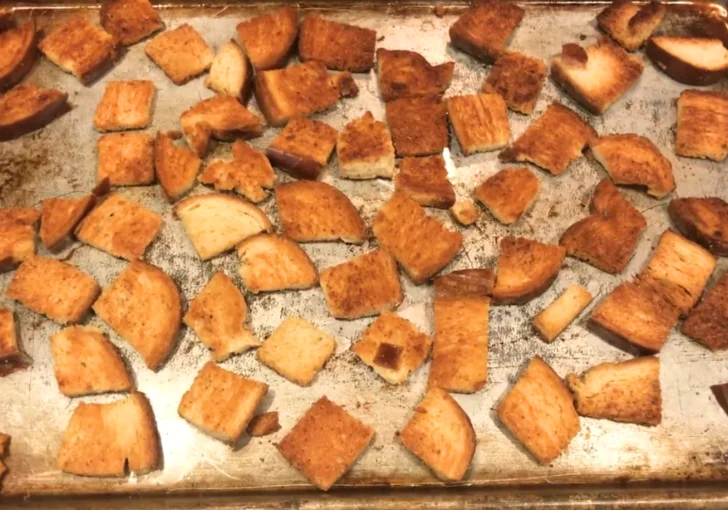
Tips for the Best Ruby Tuesday-Style Croutons
Choose your bread with care. Pumpernickel gives you a darker, hearty crouton, while rye offers a similar savory flavor. Either is a good starting point.
Keep the cubes close in size. Pieces around ¾ to 1 inch wide are large enough to give you a substantial crunch without taking too long to bake.
Add the butter slowly. Drizzling while tossing helps prevent a few greasy cubes and a batch of dry ones.
Use garlic powder instead of fresh garlic. Powder spreads more evenly and is less likely to burn during the short baking time.
Check early if your bread is stale. Very dry bread may crisp before the 10-minute mark, so start checking sooner.
Leave space on the baking sheet. A single layer helps the cubes dry out and brown rather than steam.
Cool completely before storing. Warm bread releases steam, which can soften your croutons inside a closed container.
Mistakes to Avoid While Making This Ruby Tuesday Crouton
Cutting the bread too small: Tiny cubes dry out quickly and may become hard before they develop a pleasant crunch. I stick to pieces about ¾ to 1 inch wide for a more substantial bite.
Pouring all the butter in one spot: The bread underneath may turn greasy while the other pieces remain dry. Drizzle slowly and keep tossing so each cube gets some of the melted butter.
Using too much salt: Bread and salted butter can already contain plenty of salt. The ½ teaspoon in this recipe is a useful starting point, but you can reduce it if your bread tastes salty on its own.
Crowding the baking sheet: Bread cubes piled together won’t brown as evenly. Spread them out, and use another baking sheet if needed.
Baking without checking: Fifteen minutes is a guide, not a rule. Dry bread can finish sooner, while fresh bread may need a few extra minutes. Check the color and texture rather than relying only on the timer.
Putting warm croutons in a container: Trapped steam softens the bread and takes away that fresh-baked crunch. Let the croutons cool completely before packing them away.
What to Serve With Ruby Tuesday Croutons
Garden Salad with Ranch Dressing
Toss crisp lettuce with sliced cucumbers, tomatoes, shredded carrots, and ranch dressing. Add the croutons just before serving so they stay crunchy. I like to leave some cubes whole on top because they give the salad a hearty restaurant-style finish.
Classic Caesar Salad
Romaine lettuce, Parmesan cheese, and Caesar dressing make a natural match for buttery garlic croutons. Break a few cubes into smaller pieces if you want the garlic flavor in more bites. Finish with freshly grated Parmesan and serve while the lettuce is cold and crisp.
Tomato Soup
A bowl of warm tomato soup is even better with a handful of crunchy bread cubes on top. Add the croutons after ladling the soup into bowls so they don’t become soggy too quickly. A little black pepper and grated cheese make a nice finishing touch.
Grilled Chicken Salad
Slice grilled chicken over mixed greens with tomatoes, cucumbers, and your favorite dressing. The croutons add a satisfying crunch and a buttery flavor that works well with the smoky chicken. For the best texture, scatter them over each serving at the table.
Steakhouse-Style Dinner
Serve a simple side salad with croutons alongside grilled steak, baked potatoes, or roasted vegetables. The dark bread and garlic seasoning fit nicely with a hearty dinner. Use a shallow salad bowl and spread the croutons across the top so every portion gets a few.
How to Store Leftovers, Freeze, and Reuse
Leftover Croutons
Let the croutons cool completely before transferring them to an airtight container. Store them in a cool, dry place at room temperature and use them within a few days for the best crunch.
Check for any signs of spoilage before eating, and discard them if you notice mold, an unusual smell, or moisture.
Freezing Croutons
You can freeze fully cooled croutons in a freezer-safe bag or container, although freezing may affect their texture. Remove as much excess air as possible and keep them frozen for up to about 2 months for best quality.
Thaw only the amount you need, then crisp them in a 300°F oven for a few minutes. Avoid freezing croutons that have already become damp.
Reusing Soft Croutons
If your croutons have softened but are still fresh and show no signs of spoilage, spread them on a baking sheet and warm them at 300°F until crisp again. Let them cool before serving.
You can also crush them into coarse crumbs and sprinkle them over casseroles or baked vegetables. Don’t try to rescue croutons that have mold or an off smell.
FAQs
What bread is closest to Ruby Tuesday-style croutons?
Pumpernickel is a good choice if you want dark, hearty croutons with a distinctive flavor. Rye bread is a practical substitute and works well with the butter, garlic powder, and salt in this recipe.
Can I use fresh bread instead of stale bread?
Yes, fresh bread works. It may need a few extra minutes in the oven because it contains more moisture. Check the croutons after 10 minutes and continue baking in short intervals until the outside is crisp and golden.
Why are my homemade croutons chewy?
Chewy croutons often need more time to dry out, or the bread cubes may have been crowded on the baking sheet. Spread them in a single layer and bake a little longer, checking often to prevent the edges from burning.
Can I make these croutons without butter?
Yes. You can substitute olive oil, using a similar amount and tossing well to coat the bread. The flavor will be different, but the croutons can still turn crisp and savory. Start checking them early because the browning may vary.
Can I add other seasonings?
Absolutely. A little dried parsley, Italian seasoning, or black pepper can add more flavor. Start with a small amount so the seasonings don’t overpower the bread. If you add grated Parmesan, watch the croutons closely because the cheese can brown faster than the bread.
How do I keep homemade croutons crispy?
Let them cool completely before storing them in an airtight container. Keep the container in a dry place, away from steam and moisture. If they soften after storage, warm them in a 300°F oven for a few minutes and let them cool before serving.
Can I make Ruby Tuesday croutons ahead of time?
Yes. Bake them a day or two before serving, cool them completely, and store them in an airtight container at room temperature. For the best crunch, add them to salads just before serving instead of tossing them with the dressing ahead of time.
Ruby Tuesday Crouton Recipe
This Ruby Tuesday crouton recipe turns pumpernickel or rye bread into big, crunchy cubes with melted butter, garlic powder, and salt. I use just 4 simple ingredients and bake them at 375°F for about 15 minutes, making this copycat Ruby Tuesday crouton recipe easy to prepare at home. These homemade garlic butter croutons bring a hearty crunch to restaurant-style salads. Serve them over a garden salad, toss them into Caesar salad, or add them to your favorite soup.
Ingredients
- 4 cups bread cubes
- 4 tablespoons butter (½ stick)
- ½ teaspoon garlic powder
- ½ teaspoon regular table salt
Instructions
- Step 01 – Cut the Bread into Cubes: Cut the bread into cubes about ¾ to 1 inch wide. Work with one slice at a time to keep the pieces from sticking together. Measure as you go until you have 4 cups of bread cubes.
- Step 02 – Season the Bread: Place the bread cubes in a large mixing bowl. Sprinkle the garlic powder and salt over the bread, then toss gently until the seasonings are evenly distributed. Separate any pieces that are stuck together.
- Step 03 – Melt the Butter: Place 4 tablespoons of butter in a microwave-safe bowl. Microwave for about 20 seconds, then check if it has melted. If needed, continue heating in short intervals until fully melted.
- Step 04 – Coat the Bread with Butter: Slowly drizzle the melted butter over the bread cubes while tossing continuously. Keep mixing until the butter coats the cubes as evenly as possible. Scrape any remaining butter and seasoning from the bottom of the bowl and mix it into the bread.
- Step 05 – Arrange on a Baking Sheet: Preheat your oven to 375°F. Spread the coated bread cubes in a single layer on a baking sheet, leaving a little space between the pieces for even browning.
- Step 06 – Bake Until Golden and Crisp: Bake the croutons for 10 minutes, then check their color and texture. If they still look pale or feel soft, bake for another 3–5 minutes. Turn the cubes halfway through baking to help them brown evenly.
- Step 07 – Cool Before Serving: Remove the baking sheet from the oven when the croutons are golden brown and crisp on the outside. Let them cool on the baking sheet before adding them to salads or serving them as a snack.
Nutrition Information:
Serving Size: ½ cupAmount Per Serving: Calories: 130